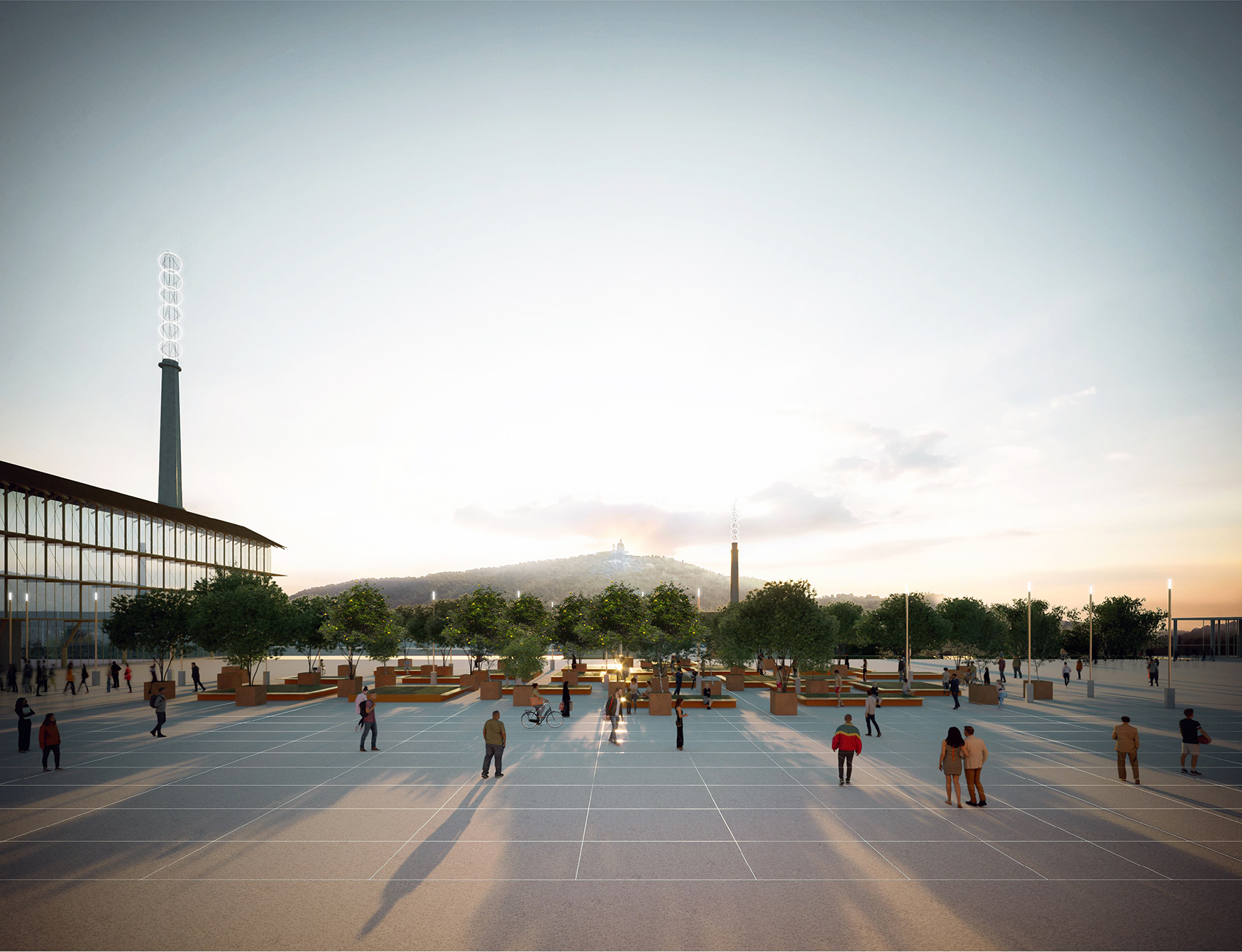
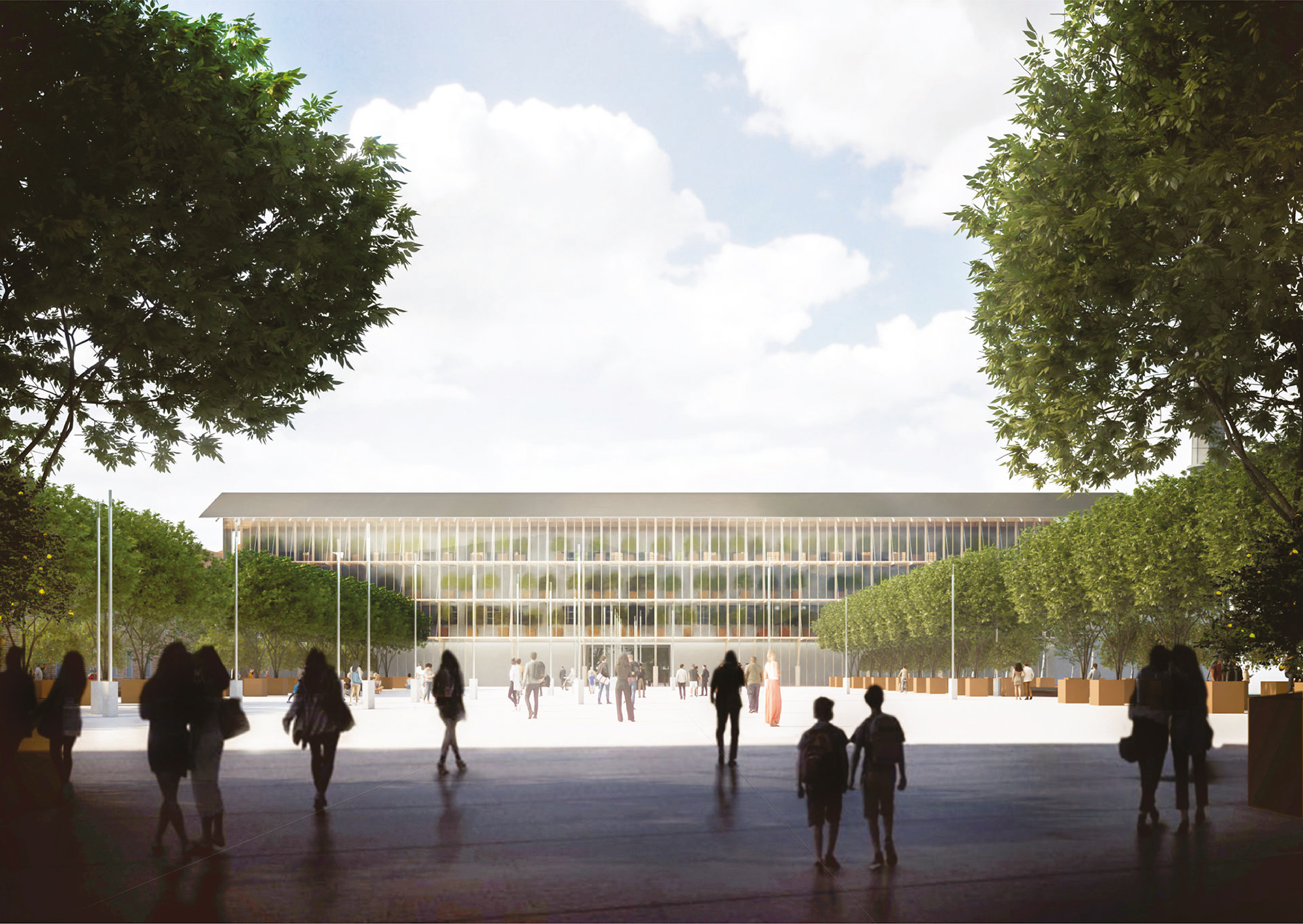
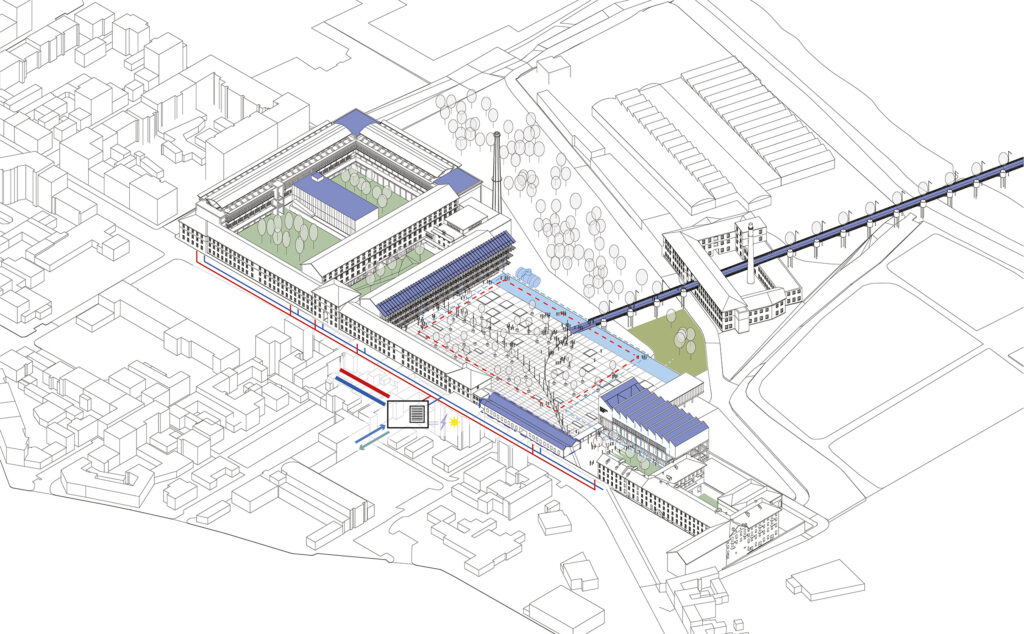
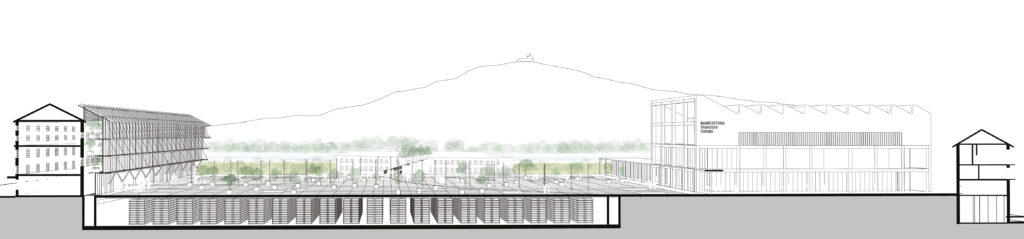
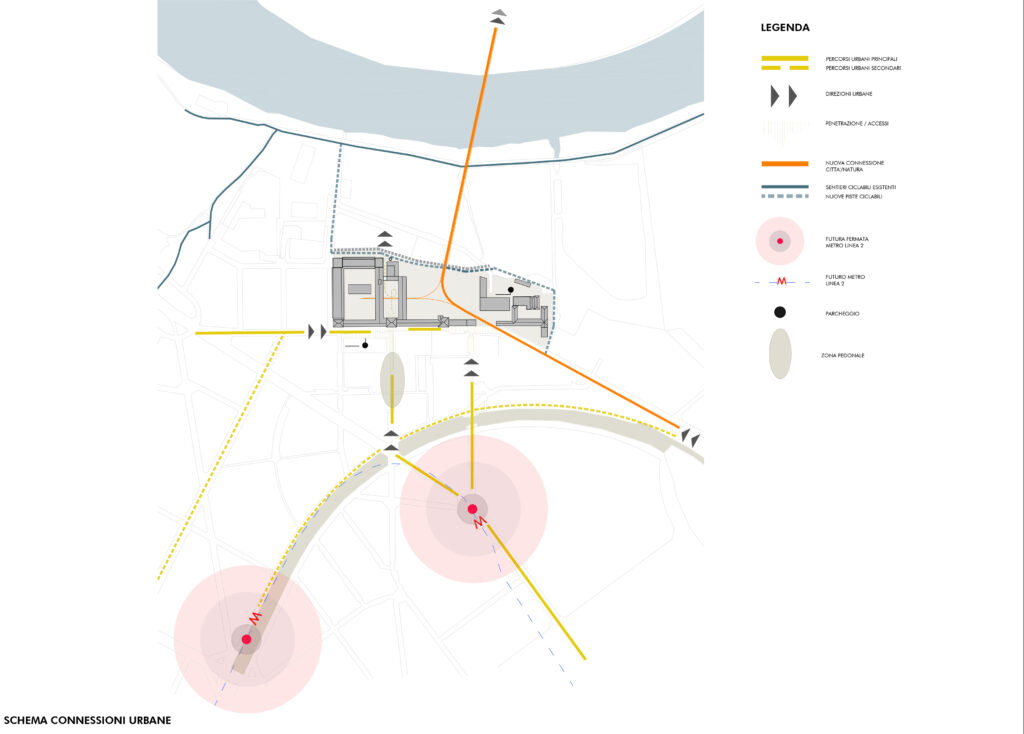
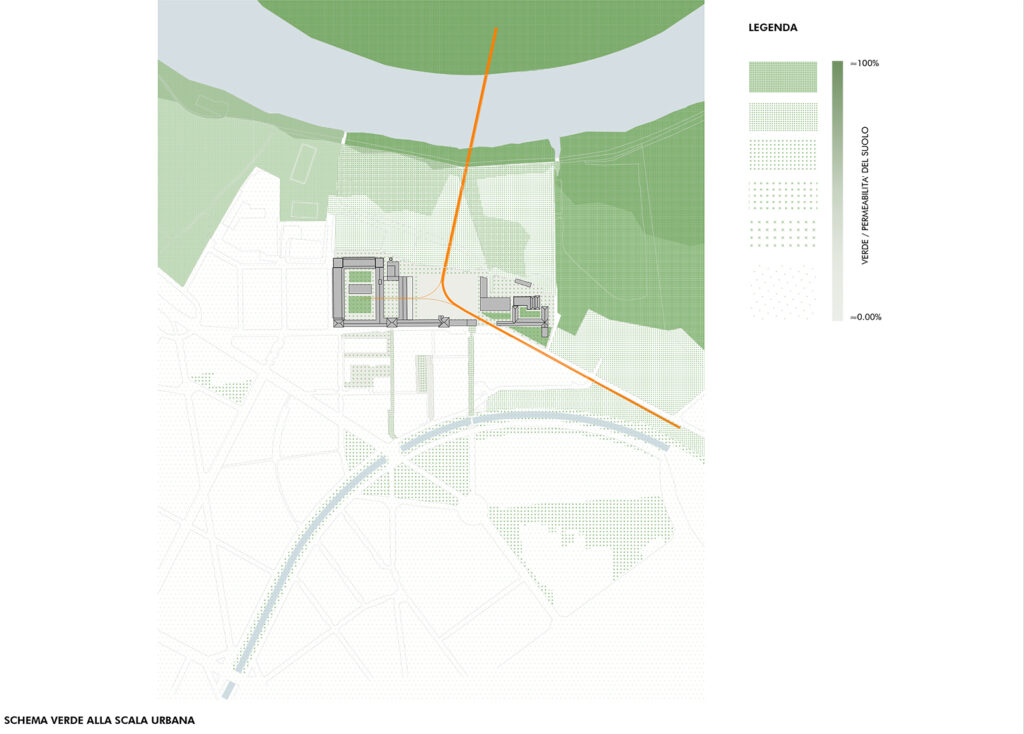
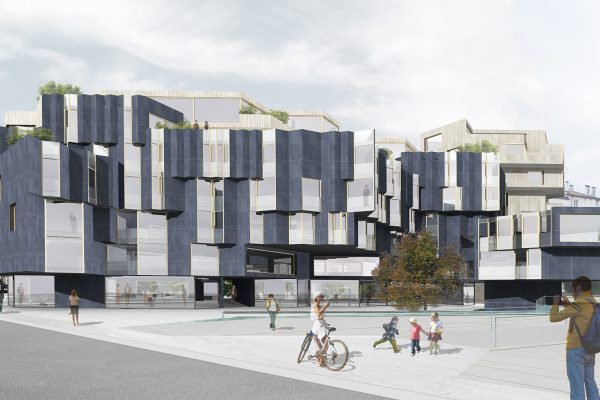
The project for the former Manifattura Tabacchi aims to create a new cultural hub with a strong urban impact. Its central idea is to avoid constructing new above-ground buildings and instead place the entire archive in a large underground volume. This strategy makes it possible to generate a new square that becomes the focal point of urban flows, a connection between the city and the river landscape, and an opportunity to revitalise the whole complex.
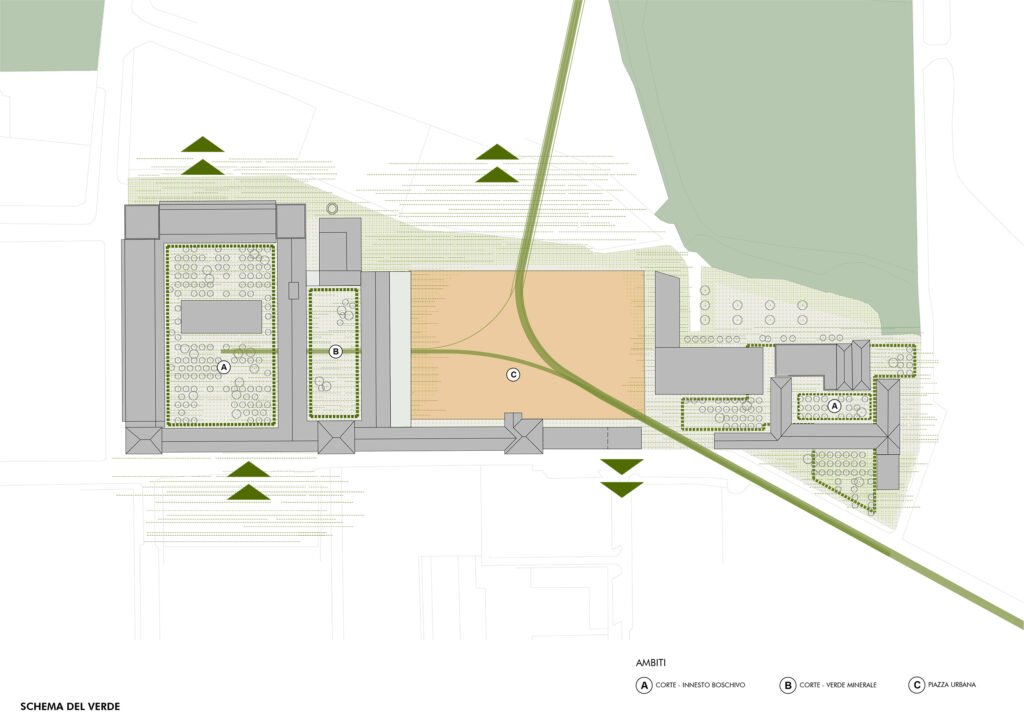
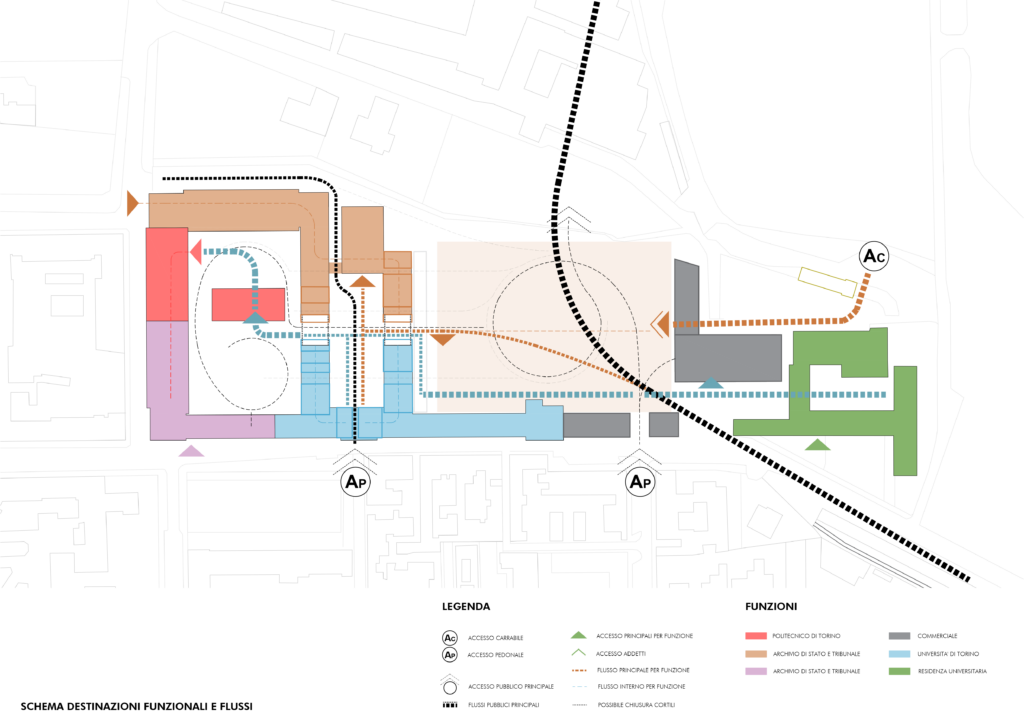
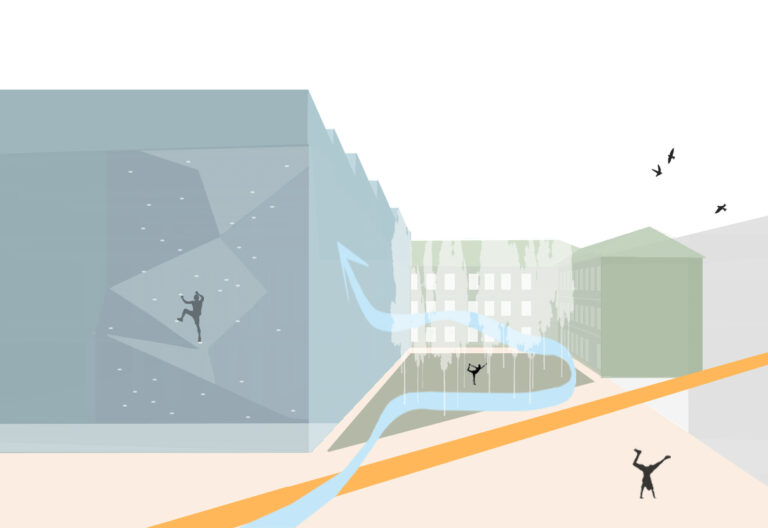
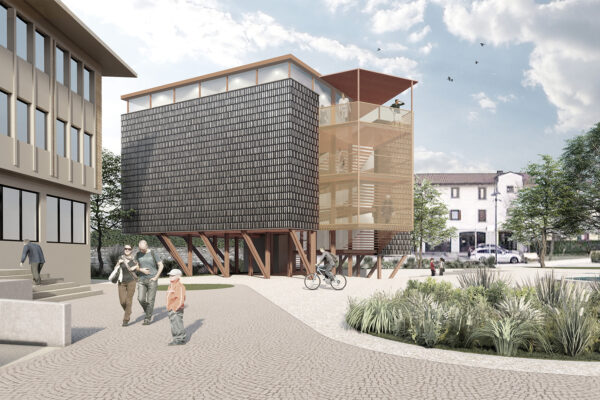
The new square emerges as a large open space that reflects the historical layout and connects both to the built context and to the natural environment of the Po River. Around it, the project preserves and transforms existing buildings: Building 14 is reinterpreted as a permeable structure hosting sports activities and a bioclimatic greenhouse, while Building 12 is maintained for its documentary value and as the new entrance from the future metro station. The proposal also introduces a pedestrian and cycling bridge linking the two riverbanks, extending the soft-mobility network.
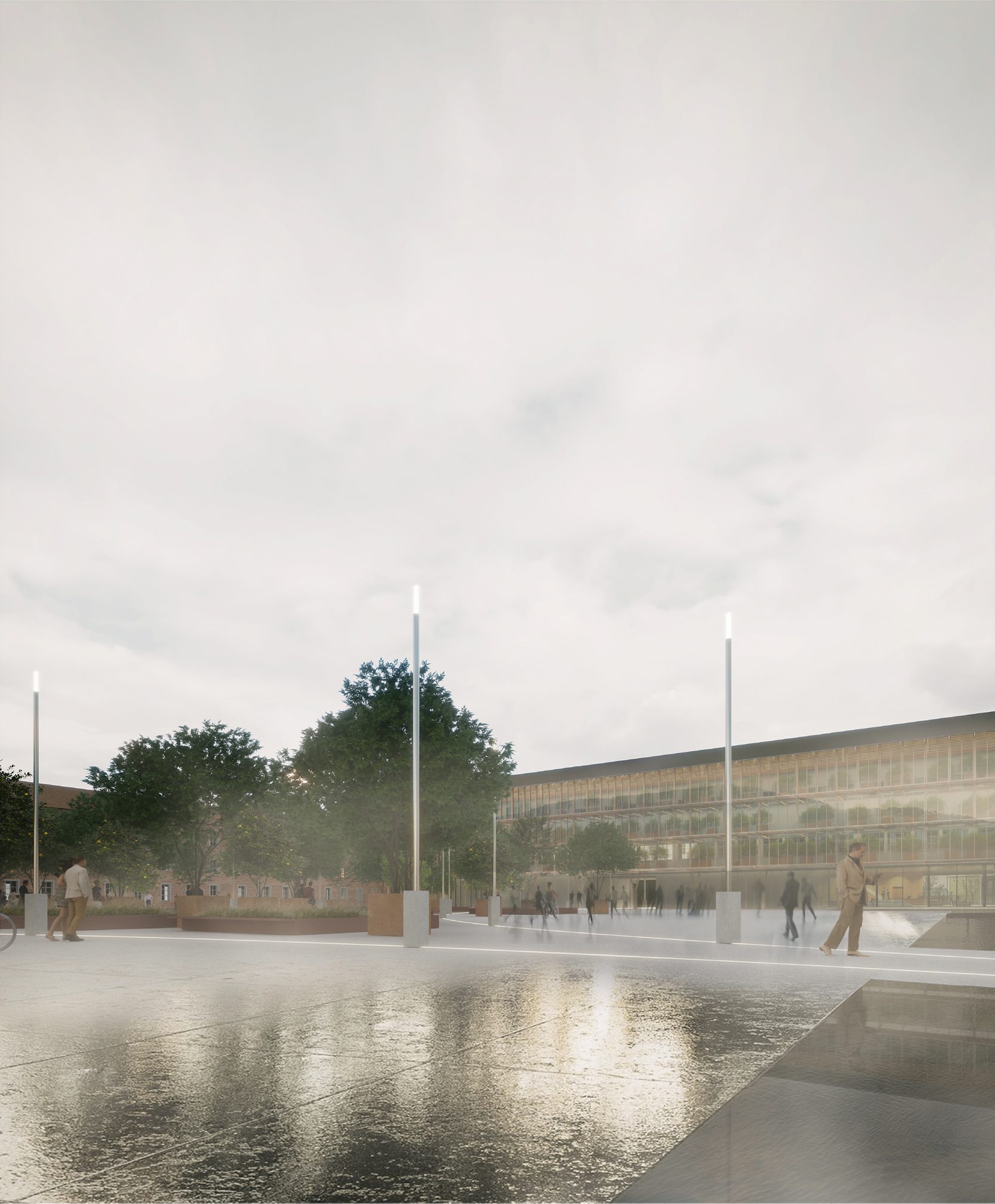
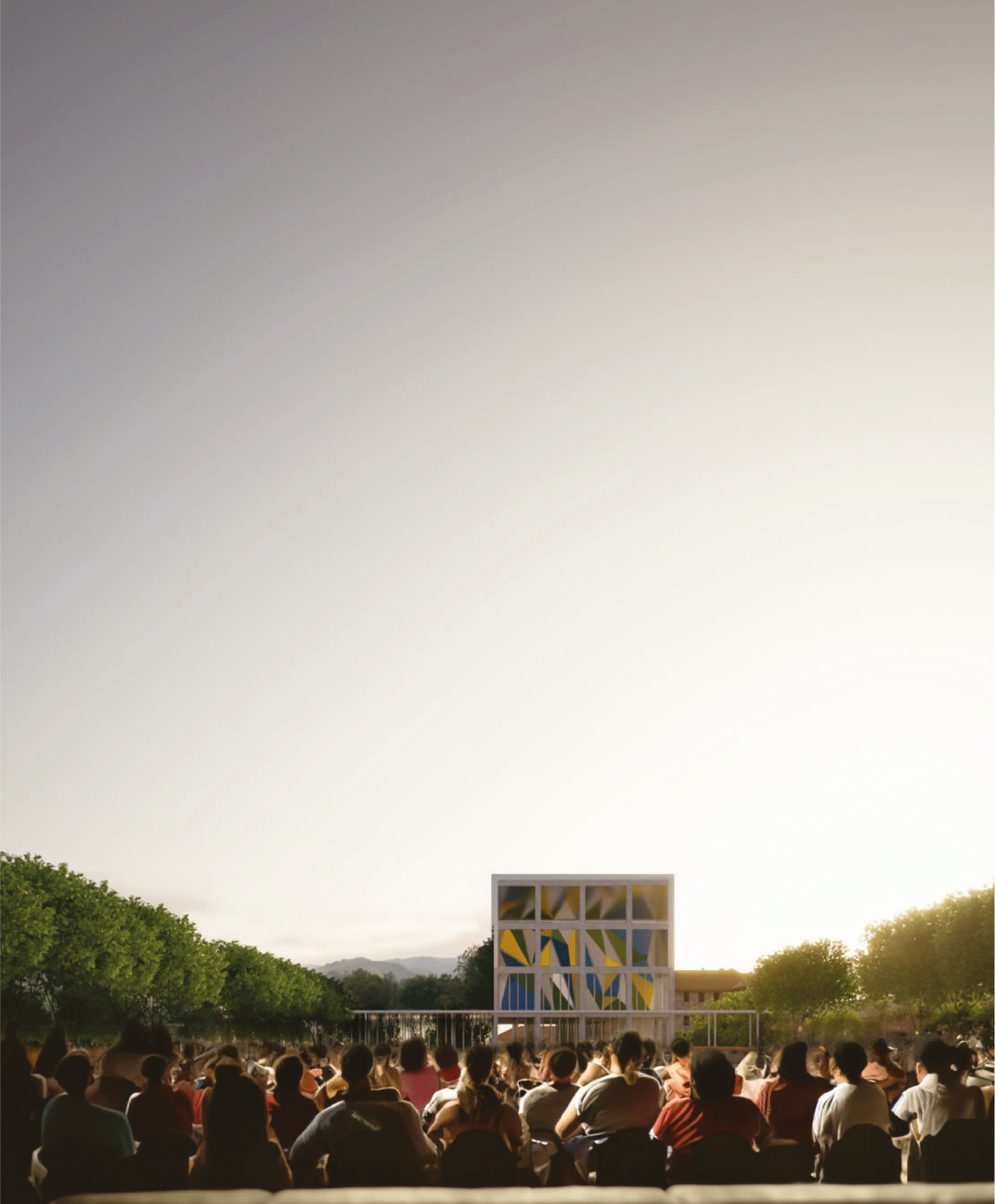
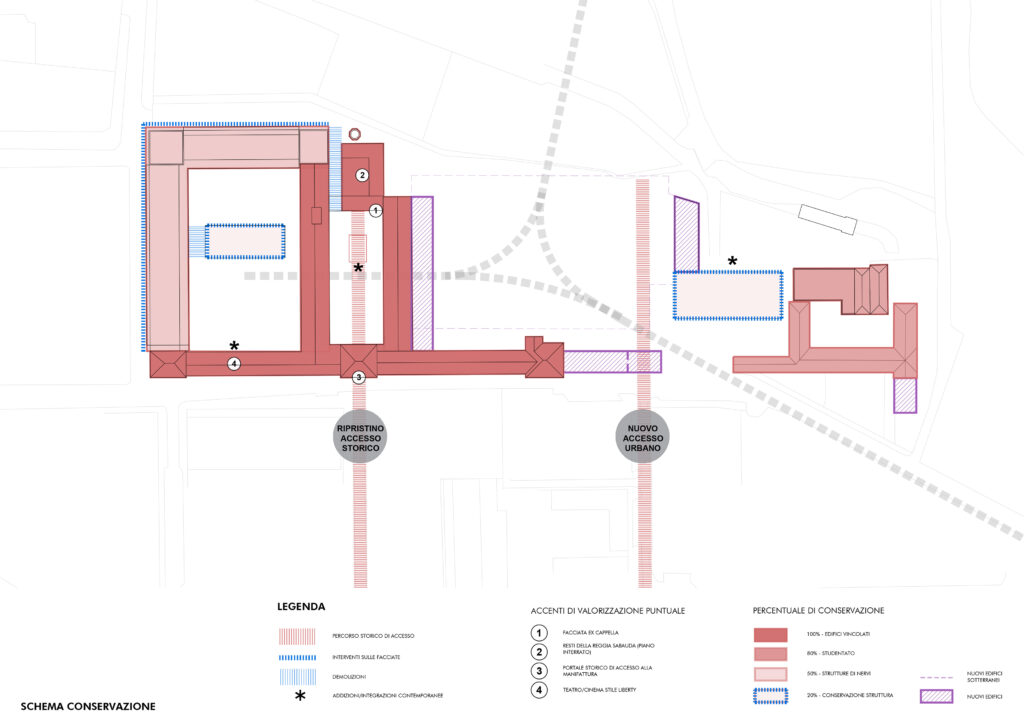
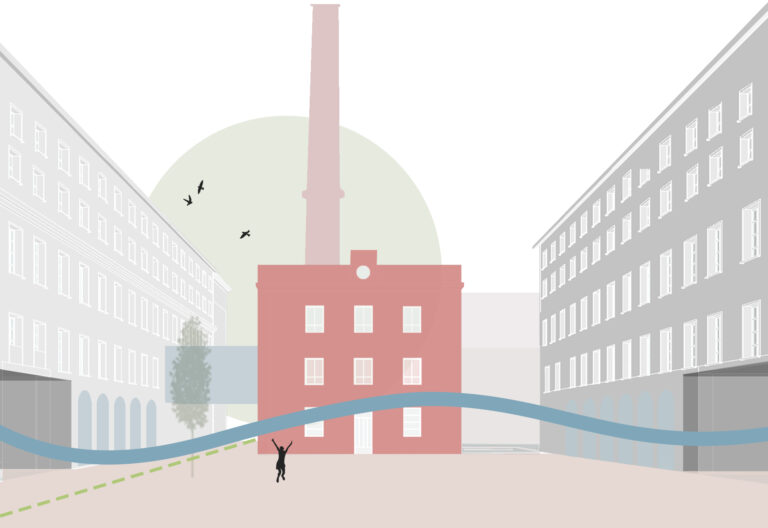
The enhancement of the site’s historical layers includes restoration based on the reading of existing stratifications, the recovery of significant spaces such as the Central Power House, the redesign of the courtyards, and the restoration of the Liberty-style theatre. The project also revisits the historical relationship with the Italian-style gardens through a mechanised system of movable green elements, and introduces a linear water feature that defines the edge of the square and re-establishes visual continuity with the landscape.
Sustainability is addressed through internationally recognised protocols, integrating energy efficiency, water management, use of recycled materials, mitigation of infiltration risks in the underground archives, and improvement of internal comfort. Building roofs incorporate photovoltaic surfaces, while the entire site adopts solutions for reducing the heat-island effect, reusing resources, and ensuring universal accessibility.
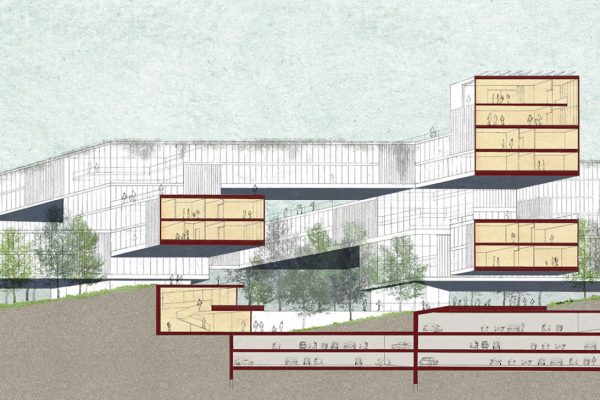
The underground archive is divided into a compact archive and a mechanised archive, with a total capacity of around 120 km of documents. Its configuration ensures high management efficiency and, if required, could accommodate the full extension defined in the DIP. Historic buildings are restored or hollowed out to host new exhibition, cultural, sports, or commercial functions, with interventions designed to remain recognisable and reversible.
Construction is organised in three phases, involving the creation of the underground archives, the progressive completion of the square, and the restoration of the historic buildings. The result is a cultural hub that weaves together memory, landscape, sustainability, and renewed urban life.