2015-2017 _ RESIDENTIAL
Renovation of stone building in the historic center
Budoia (PN), Italy
INARCH Triveneto 2023 special prize ‘WTW – WILLIS TOWER WATSON’
Photographs: Mattia Balsamini
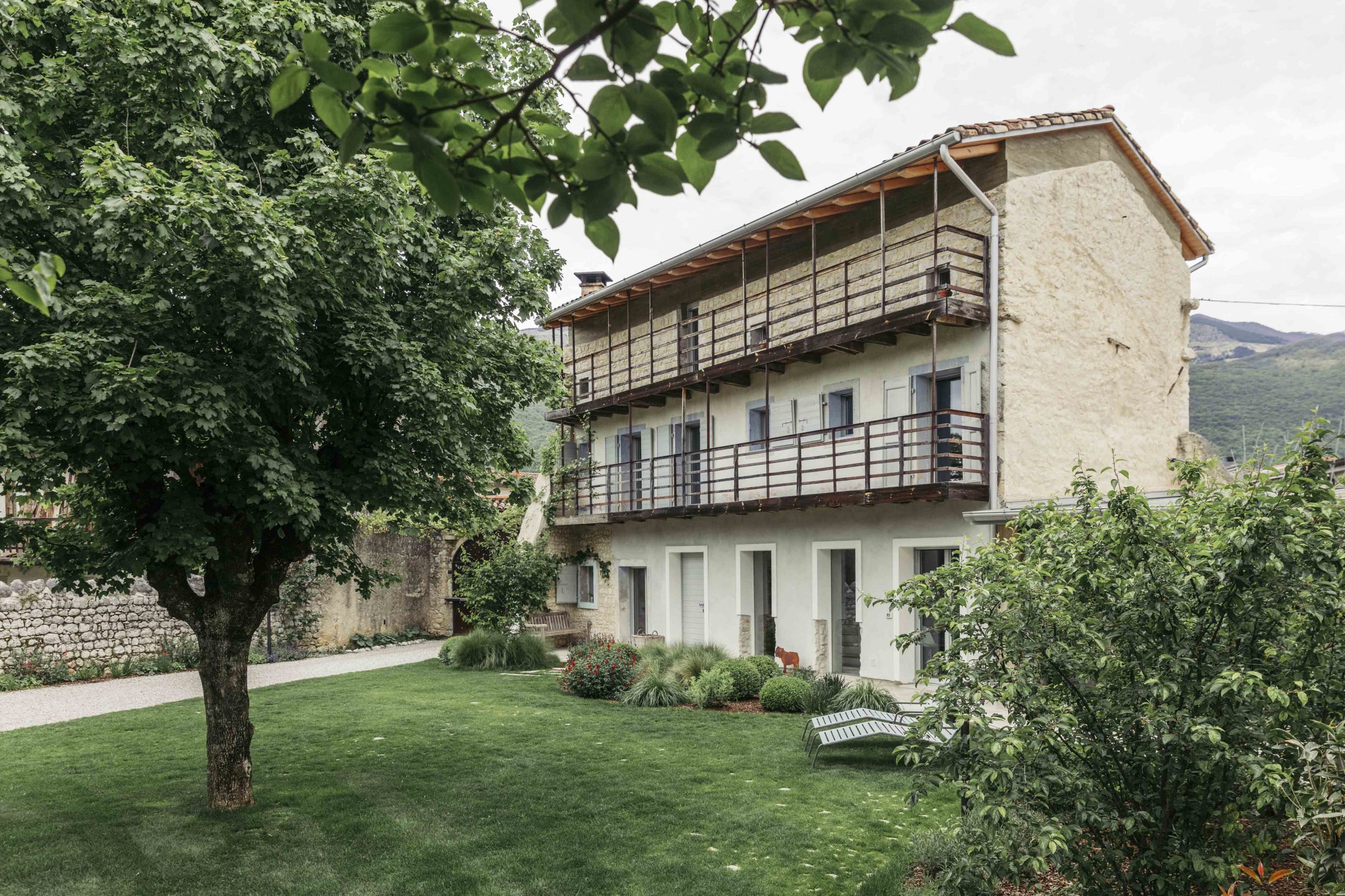
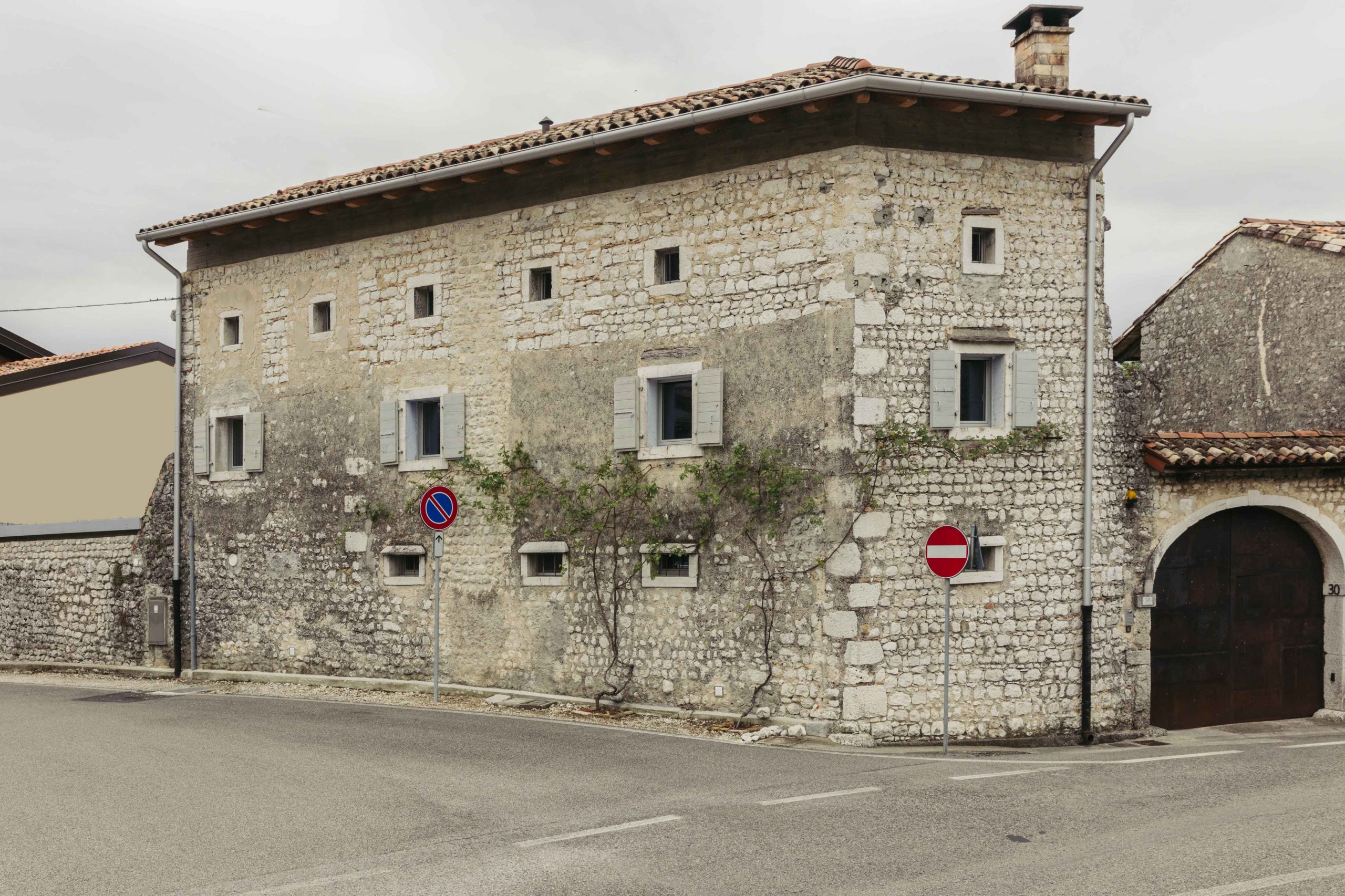
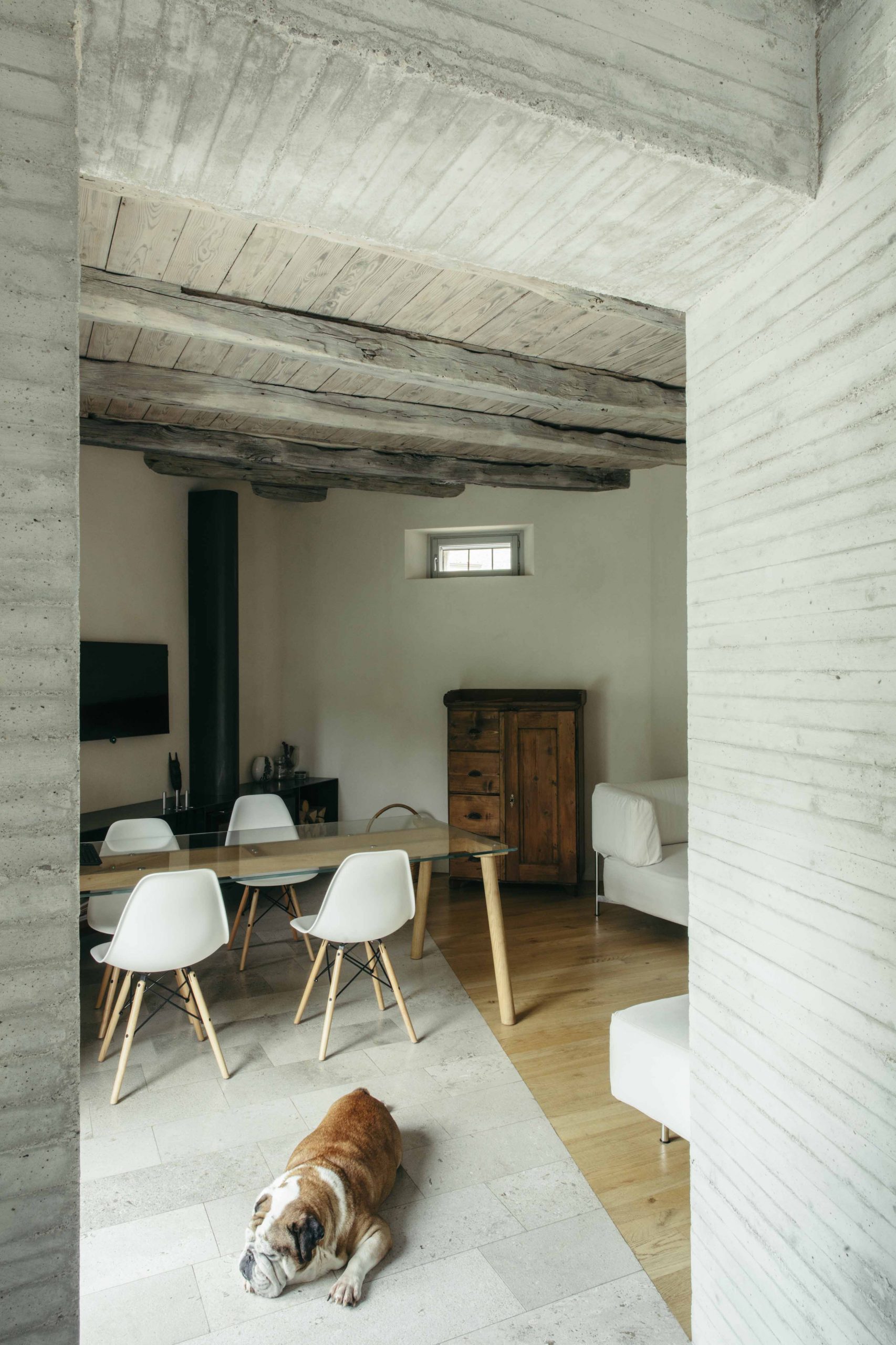
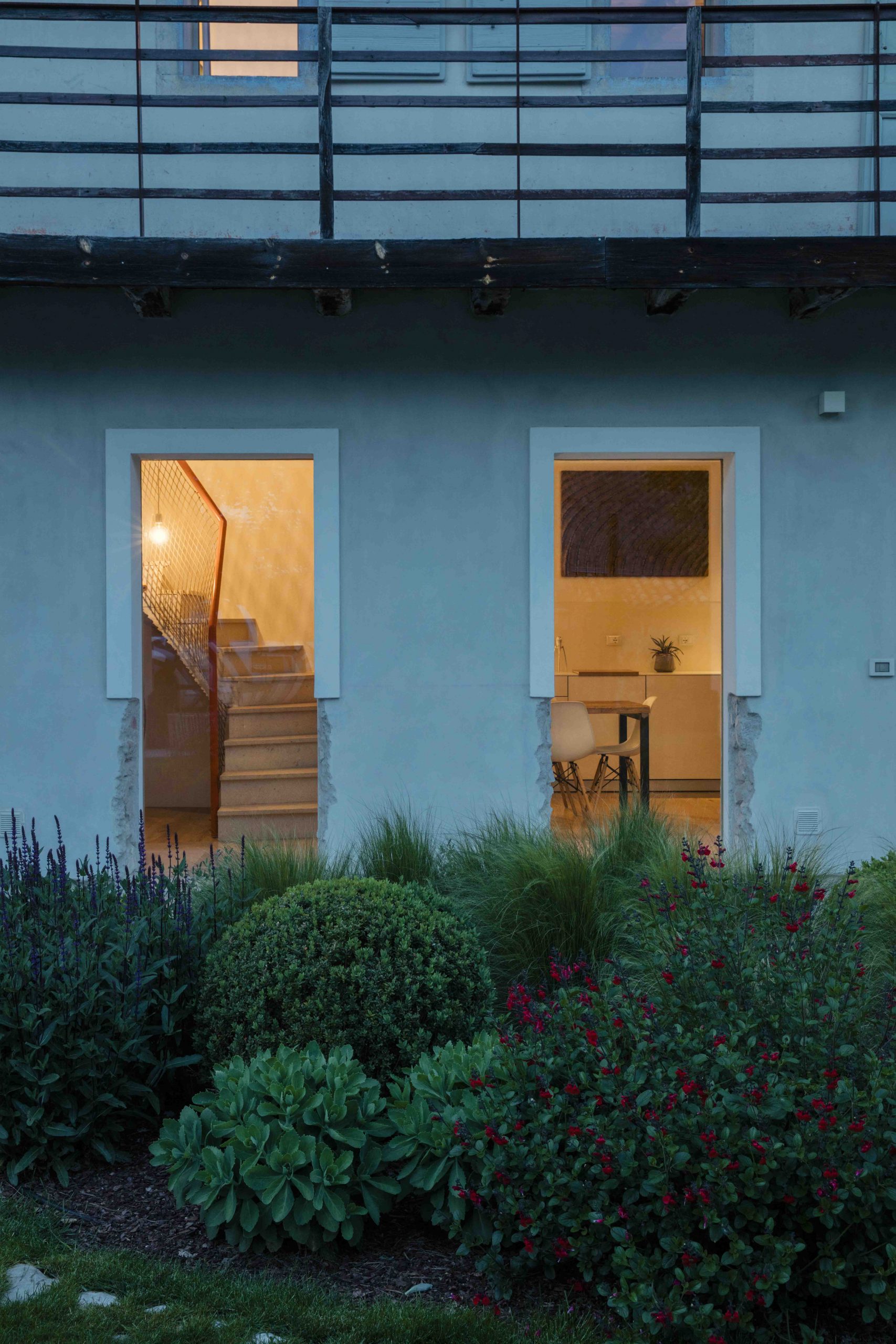
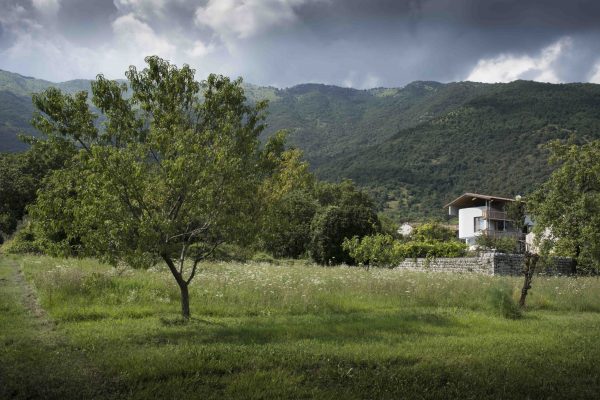
Otto’s House is one of the historic houses in Budoia, a small village at the foot of the Pordenone Prealps.
Like most modest historical buildings in the area, it was constructed using load-bearing stone walls made from rocks taken from the nearby Artugna stream, and wooden floor structures made of chestnut beams.
Although the strong 1976 earthquake did not cause major structural damage, the building’s static conditions no longer allowed for its use. This led the new owners to undertake its restoration, entrusting the project to the studio ELASTICOSPA+3, which has an office in the village and has coordinated other projects in the area, such as the Yuppie Ranch House, the Piazza dell’Uccello Caduto, and Top Gun House.
Designing within a historic context that the architects knew and loved—after having witnessed the damage caused by restorations and manipulations pretending to be philological—generated in them both a sense of insecurity and a deep sense of responsibility. They were aware of holding in their hands one of the last surviving fragments of an ancient story, a precious remnant that had endured over time thanks to its very fragility, its simplicity, and the essential nature of the means with which it had been built.
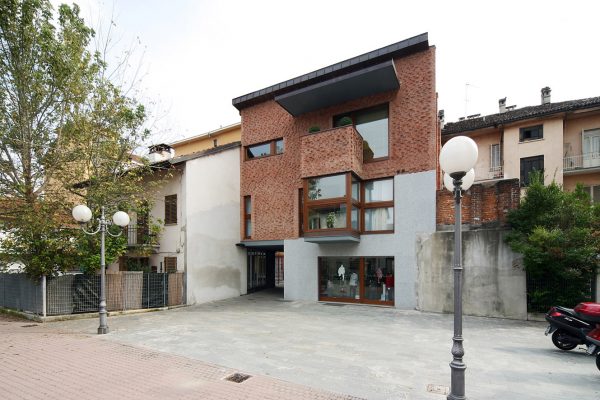
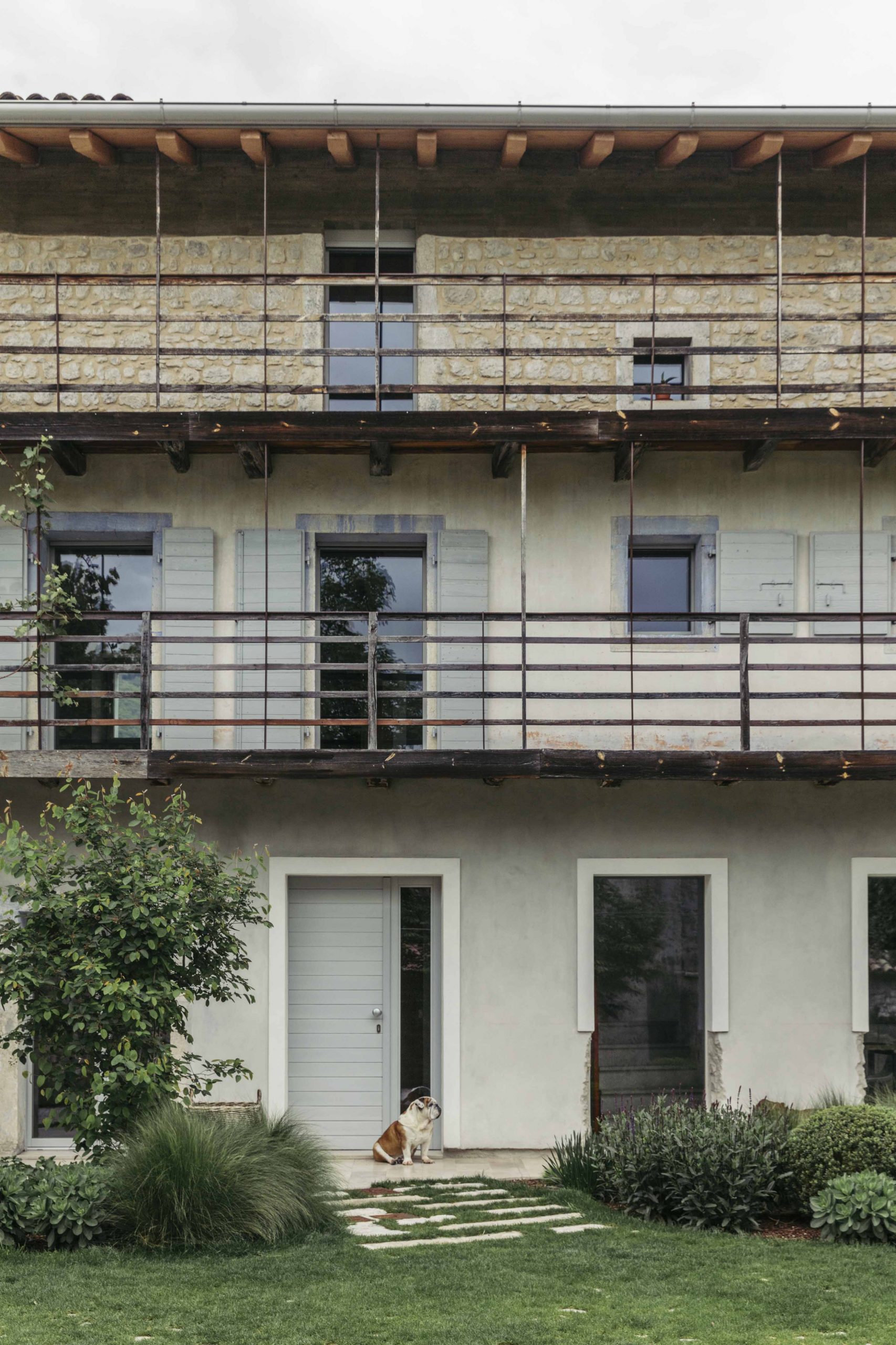
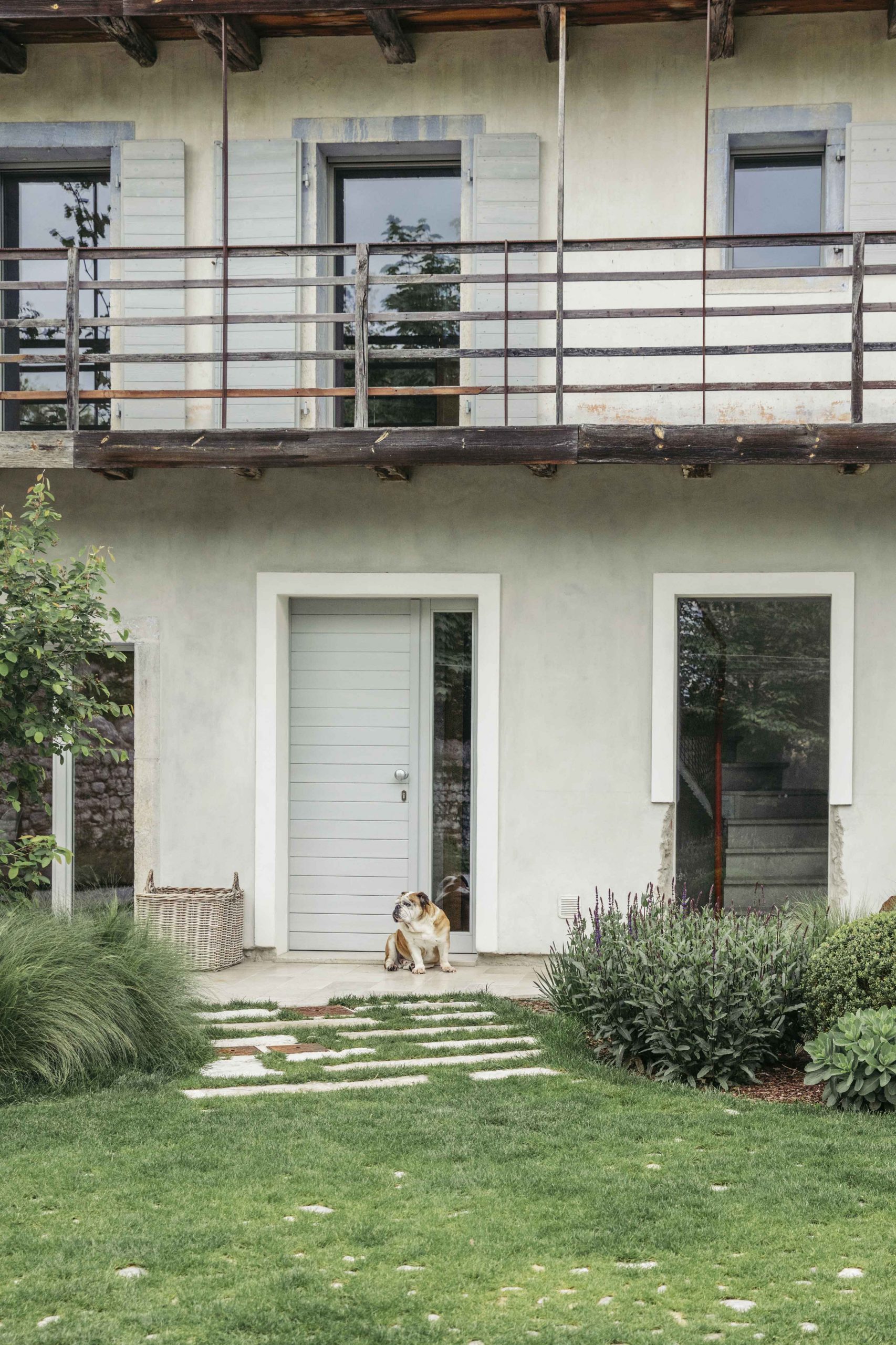
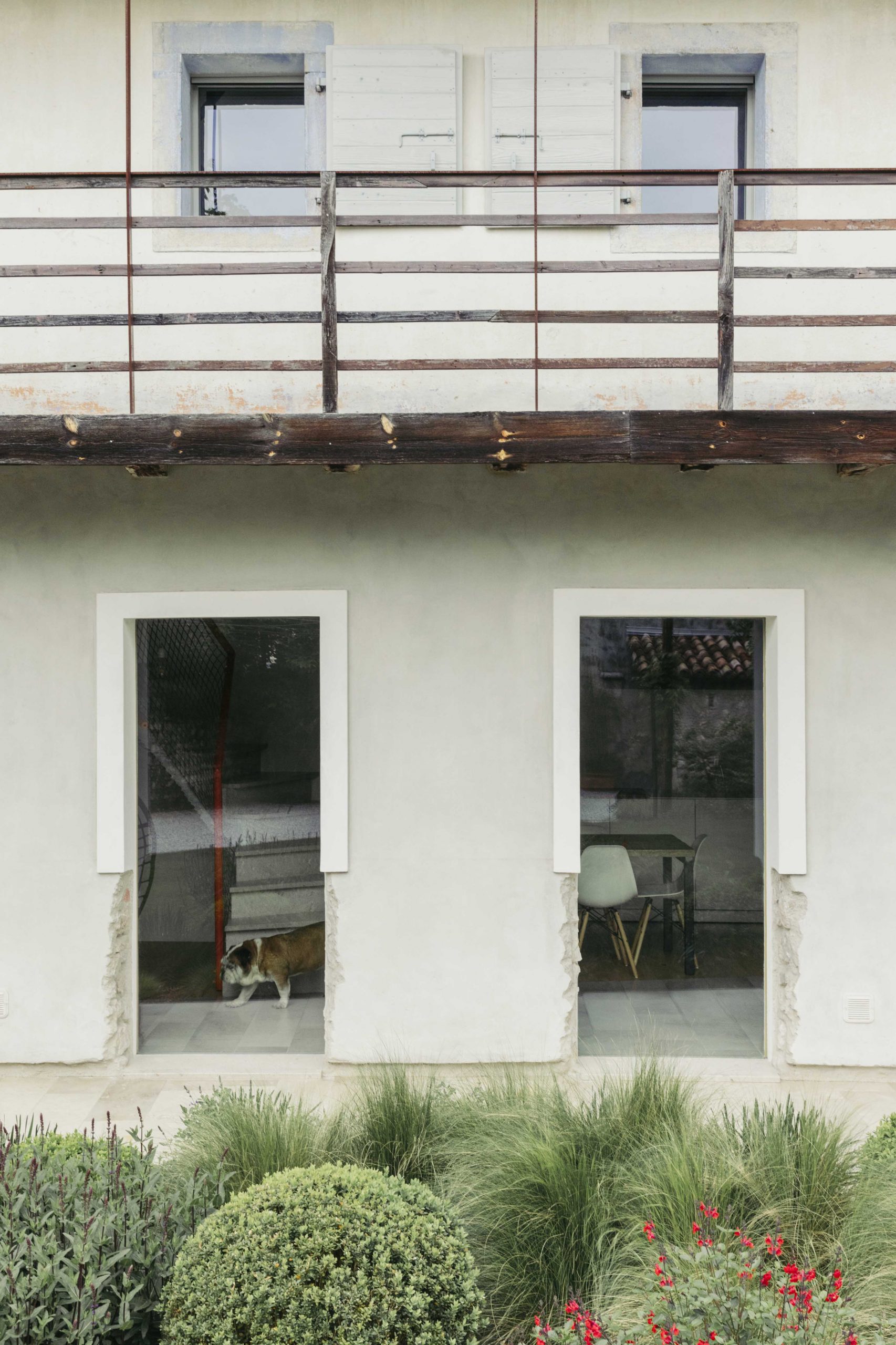
Some interventions carried out during the 1970s and 1980s had left their mark, permanently altering certain openings and finishes on the ground floor facing the courtyard. They bear witness to a way of thinking that, in this case, fortunately did little harm to the original building—unlike other instances where important historic structures and entire valuable portions of the original urban fabric were devastated.
But how can one renovate in a seismic area without compromising the original structure, without altering its proportions, and above all without losing that sense of fragility that the architects considered the house’s most precious quality?
ELASTICOSPA+3 chose to intervene in a way that would be invisible from the outside, treating the house as a monument accessible only from within—where the needs of contemporary living would inevitably transform the space, its language, and its materials.
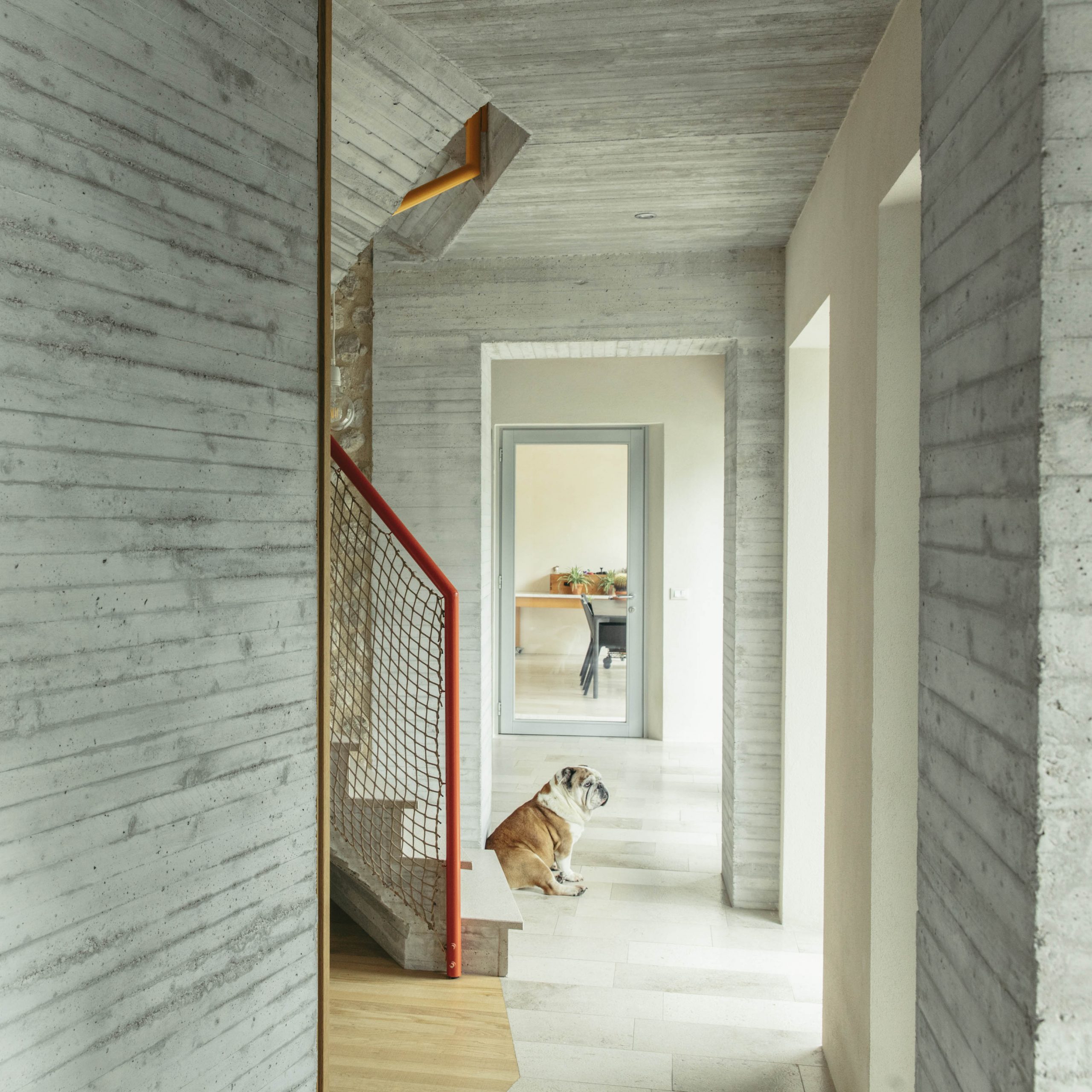
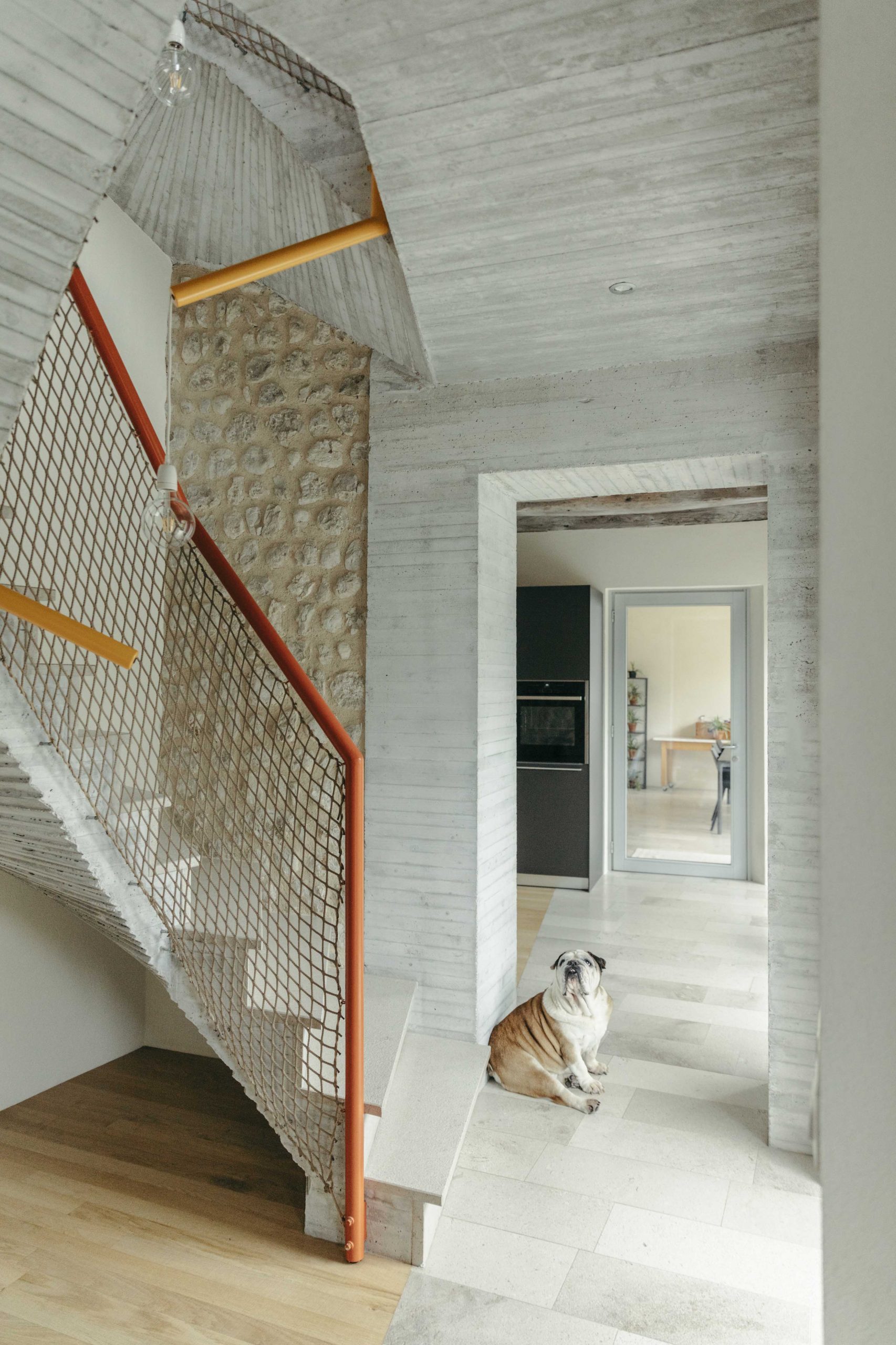
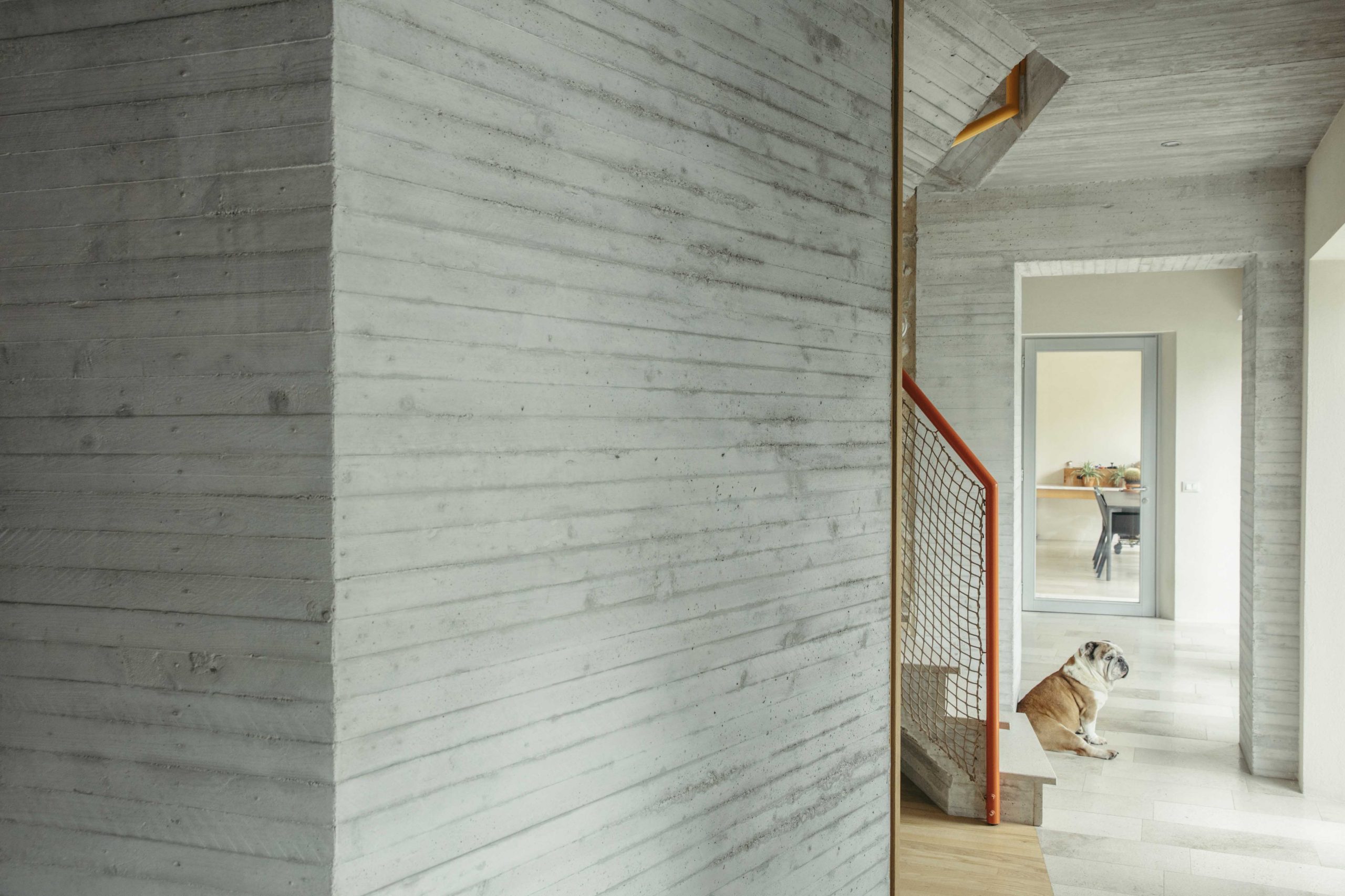
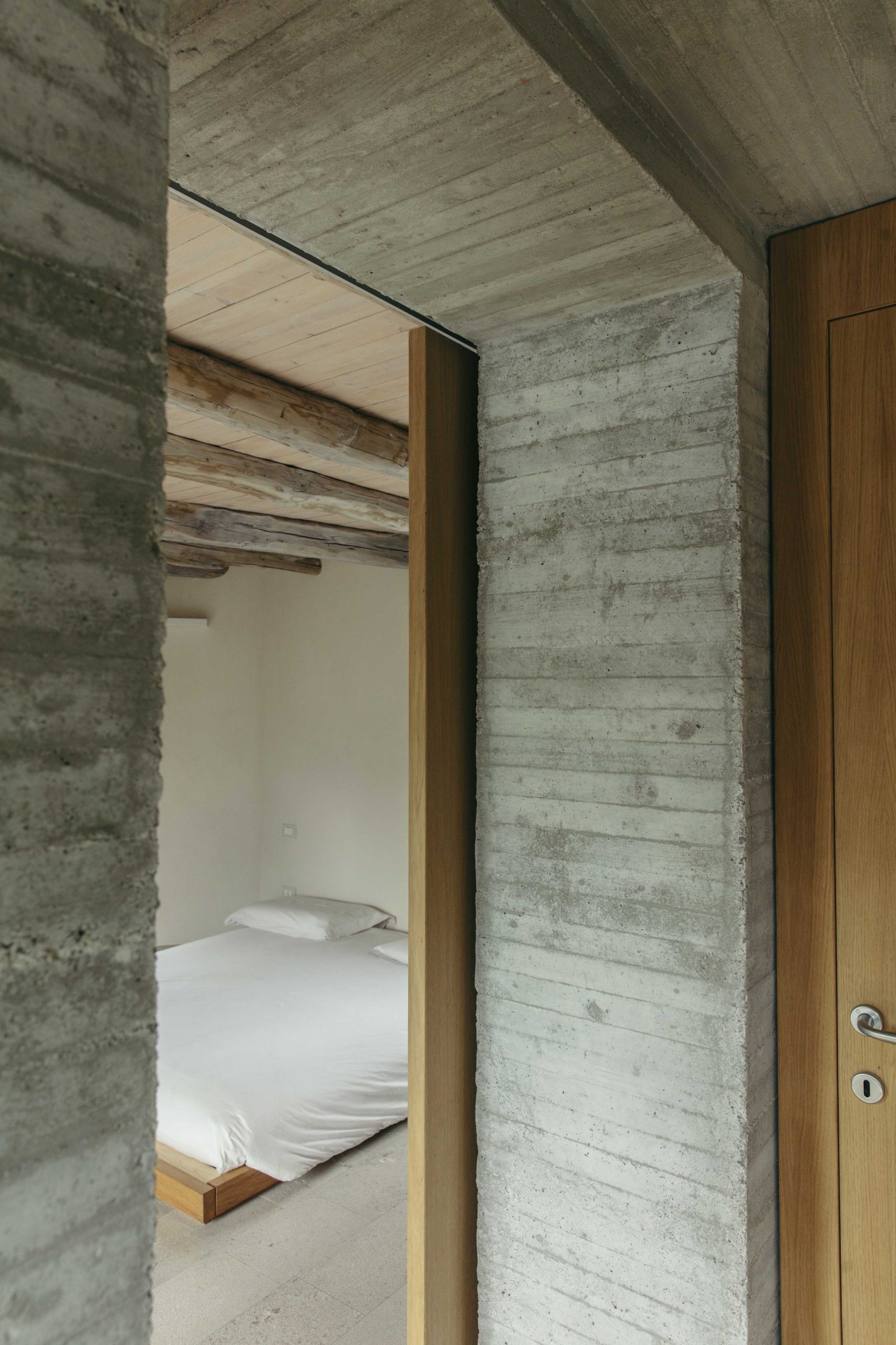
Inside, the infill stone walls alternate with load-bearing reinforced concrete structures cast in finely crafted wooden formworks, producing a soft texture suited to the domestic character of the building.
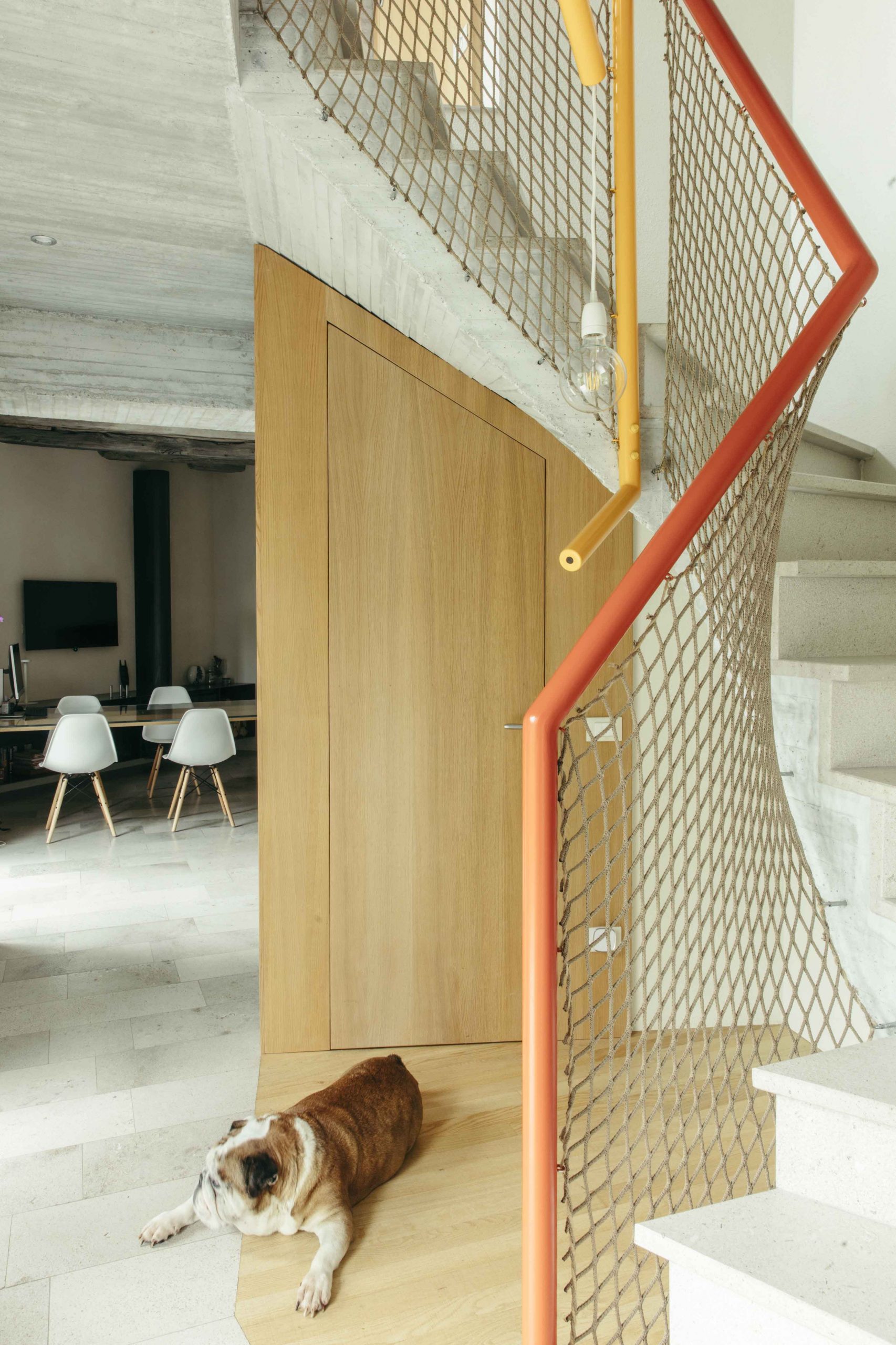
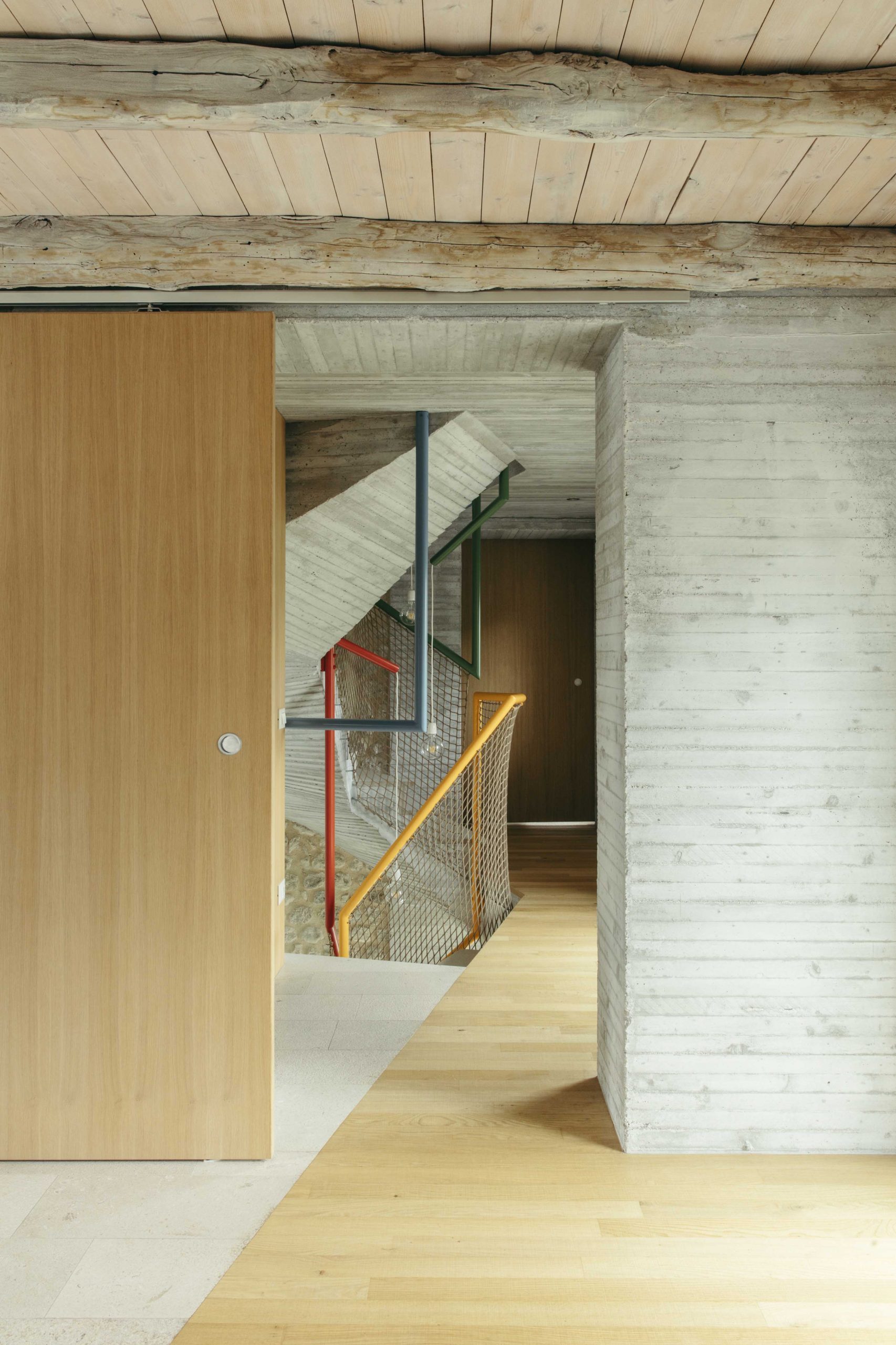
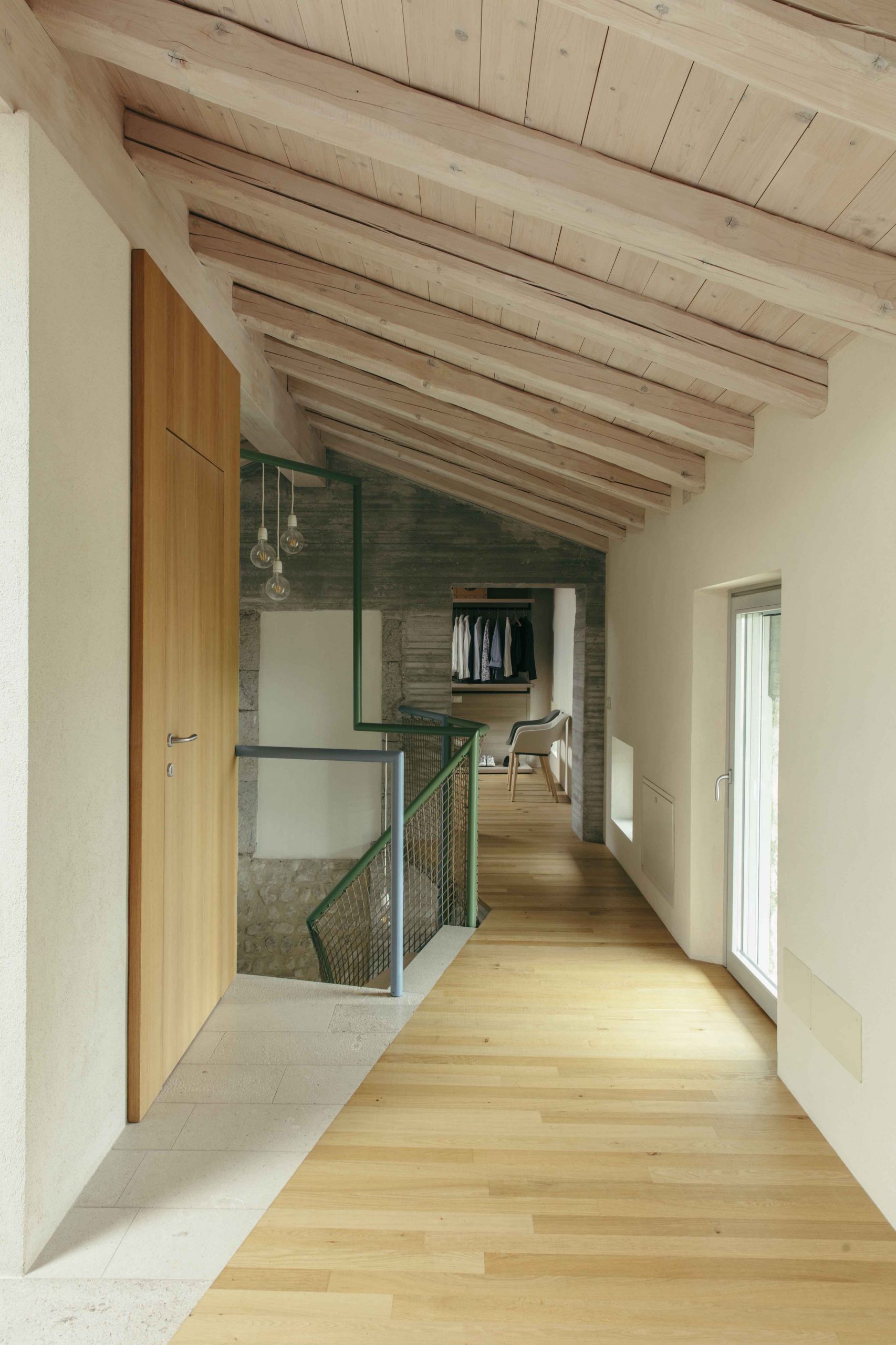
A sculptural staircase, the focal point of the new intervention, connects the different floors while also separating the various rooms. It serves not only a distributive function but also a structural one: its form acts as a bracing element for the entire building, allowing the other walls to bear only the vertical loads.
It is an unexpected sculptural structure within a system of regular spaces, playing on the dialogue between materials—an accent of color and matter that reveals both its structural and decorative roles.
Stepping back outside, one realizes that the building’s fragility, the layering of interventions, and the patina of time represent a powerful value for this part of the village, which still preserves traces of genuine rusticity.
To preserve the lightness and delicacy of the balconies, the project employs metal reinforcement profiles that at times reveal their presence and at times blend in with the thin wooden decks of the original structure.
Project design: ELASTICOFarm
Team: Stefano Pujatti, Alberto dal Maschio Valeria Brero, Daniele Almondo, Andrea Rosada, Serena Nano, Marco Burigana, Marco Zambrino, Monica Ierace
Client: private
Size: 300 mq
Progress: built